
Covington County Arrest Log Sources
The sheriff posts no daily arrest report. Covington County offers no official 72-hour, weekly, or multi-day arrest log anywhere online. The sheriff's page lists no blotter link either. A phone call to 601-765-8281 can confirm whether someone is in custody right now. For an older booking, send a written request. Ask who accepts public-record requests and whether a jail docket covers your date range. City incident reports stay with the arresting department. Filings made later sit with Justice Court, Circuit Court, or the municipal court handling the case.
Read Covington's Multi-Day Record
Start with official records, not a private photograph. Define the date window first. Keep arrest, booking, publication, and court dates in separate notes, since they often differ.
- Call the sheriff and ask for jail-docket records covering exact dates.
- Identify the arresting agency and request its incident report when needed.
- Check the county court path for an initial appearance, indictment, or judgment.
- Review dated news only for context and note each story's update time.
- Use the Arrests Last 24 Hours process when present custody is the issue.
One empty channel settles nothing. A released person can drop from a custody view while the booking record survives. A state-sentenced person may appear in an MDOC search. Federal detention uses separate systems.
Covington Arrest Entry Fields
No official field set exists to quote online. The sheriff's docket may use different labels than a private page. Ask for these items by name.
| Field | Reading rule |
|---|---|
| Name and booking ID | Use both to avoid a mistaken identity. |
| Arrest and booking dates | Do not treat them as interchangeable. |
| Agency | Identifies the likely incident-report custodian. |
| Charges | These are charges recorded at intake. |
| Bond or release | Status can change after the entry was made. |
| Photograph | No county publication policy was verified. |
Ask for a booking photo separately when a lawful records inquiry needs it. Not every arrest produces a releasable image. Never republish a private archive as a gallery.
News Is Not an Arrest Log
WDAM covers regional crime as events happen. Its stories follow press releases, charging decisions, or later developments. The News-Commercial leads locally as the county weekly. It runs no live arrest section, though. Both outlets can locate a dated event, not count every booking. The WDAM Hard News section shows the regional reporting format.
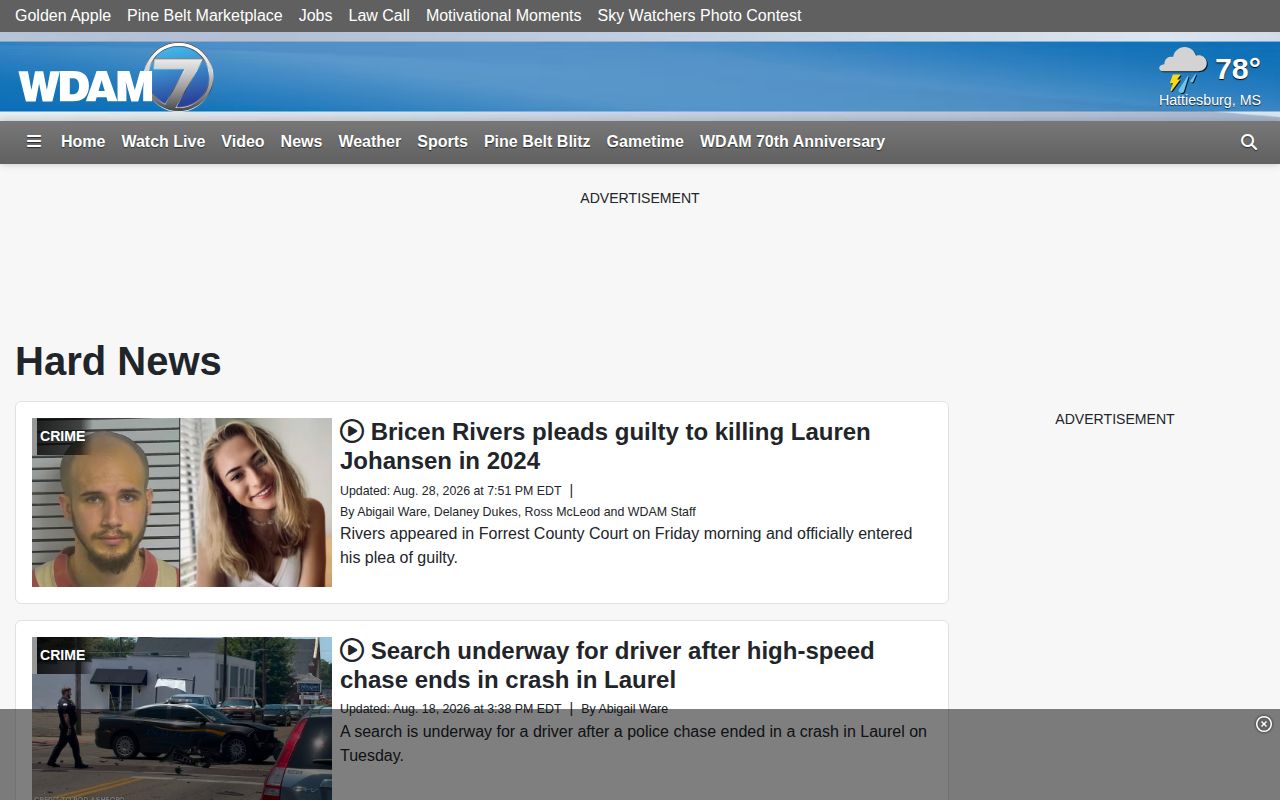
News coverage is selective, not a complete blotter. Check for corrections before repeating anything. A 2026 WDAM stabbing report shows why. The outlet updated the story to remove photographs of two sisters and to clarify that they were never charged. An image first published with breaking news can turn misleading as facts develop. Names, photos, and alleged roles shift during checking. Read the latest version and its update note before treating any detail as settled.
Covington Booking Record Retention
Mississippi keeps booking records for ten years after release under GSC 08-23, formerly 08-36. Retention is not public access. It means the county may hold the record internally. Nor does it promise every field or image stays open, indexed, or attached. The MDAH local-government page explains retention oversight.
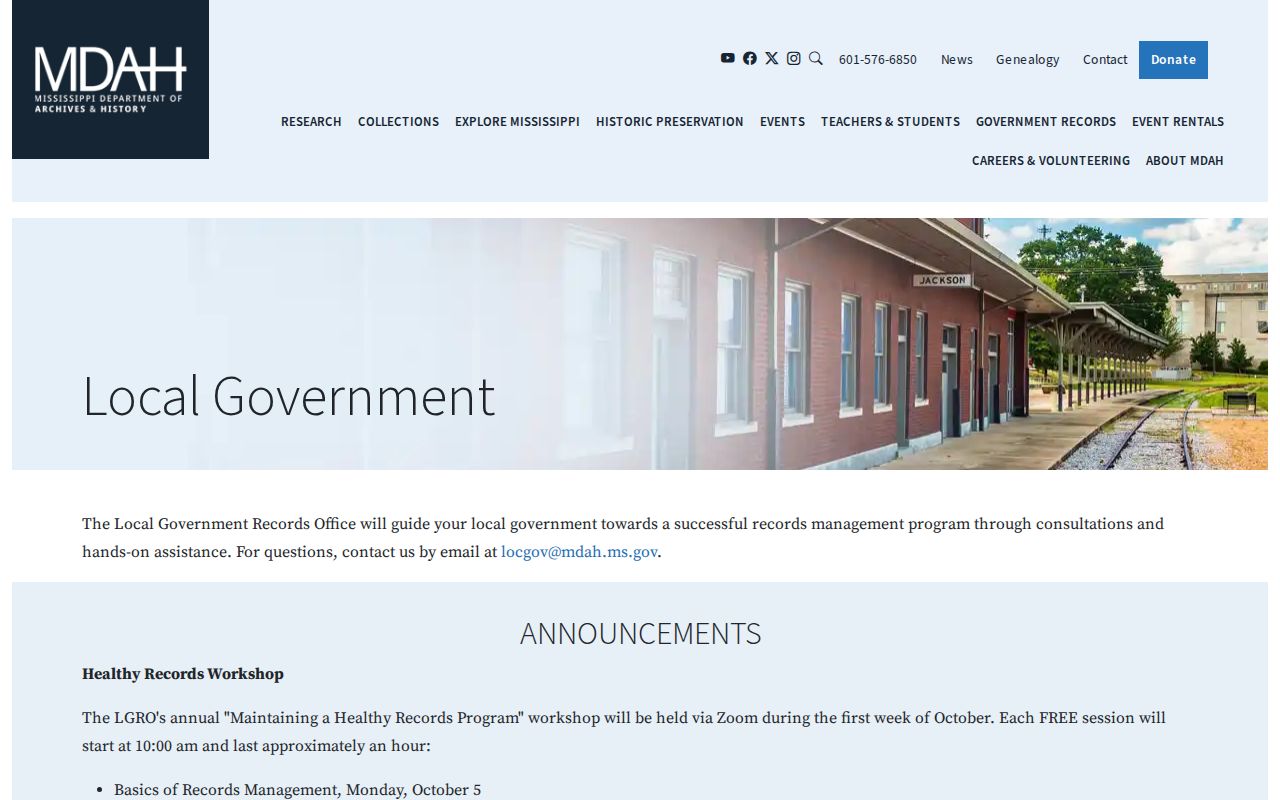
For a recent booking, the sheriff comes first. Older records raise different questions. Ask whether the series stayed or moved. MDAH catalogs and newspaper archives can help locate historical records. Neither source can show current custody or an active warrant.
Dated Covington Arrest Archives
Arrests.org carries dated Covington pages with date navigation, multiple entries, photos, and charge labels. The site is unofficial and disclaims accuracy. It can supply a lead for a past date, never proof of full coverage, timing, custody, or correction. The private dated Covington page shows its archive layout.
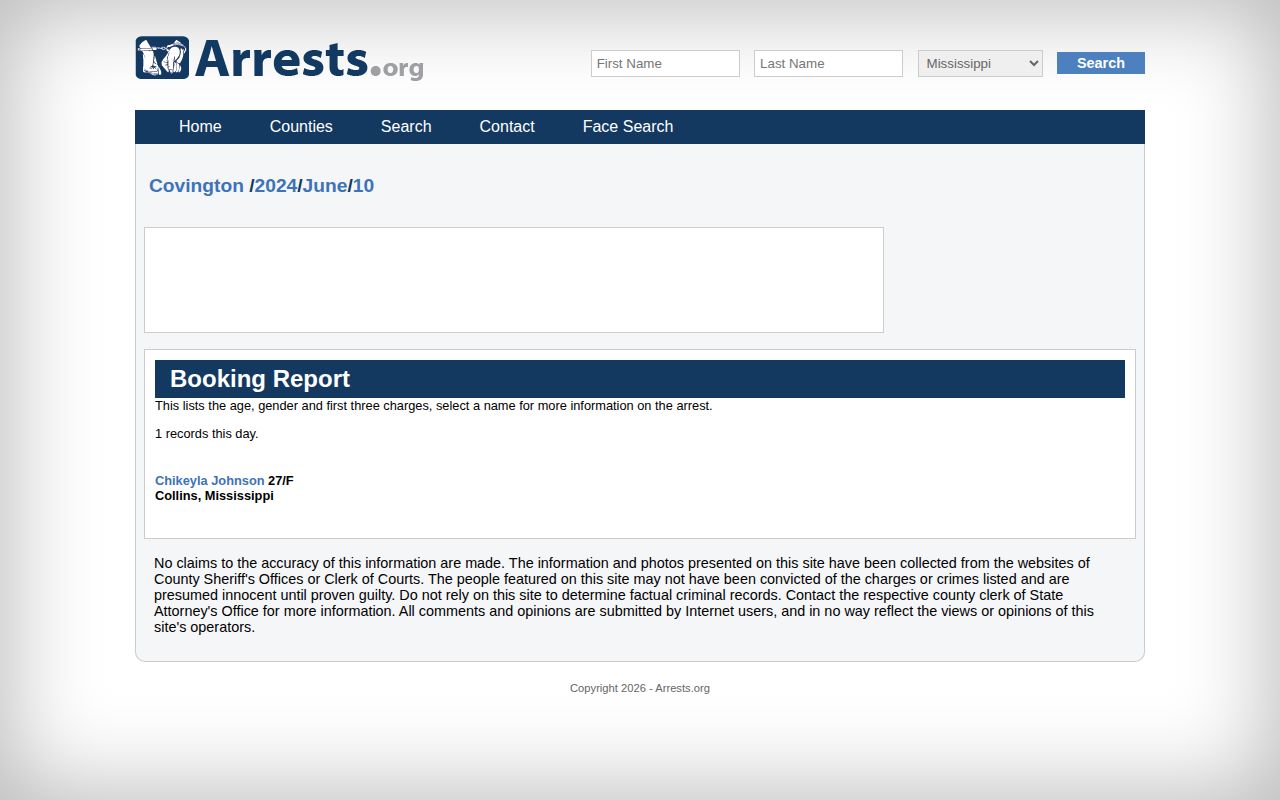
Verify each entry with the sheriff and court record.
After a Covington Arrest
Justice Court holds jail sessions three times weekly. In Covington County, it aims for an initial appearance within three days of arrest. That is why court details often surface after the booking date. It says nothing about sheriff posting schedules. Many distinct events follow an arrest: initial appearance, bond decision, indictment, plea, dismissal, judgment, and expungement. The Circuit Clerk files indictments, motions, criminal papers, and judgments. Ask for the case number. Then ask for the exact docket entry too.
Request Older Covington Arrest Records
The sheriff publishes no request form, fee schedule, or response promise. Put your request in writing. Name the person, exact dates, arresting agency, and the jail-docket fields you want, list the photo separately, and ask for a cost estimate. If part is withheld, request any separable public material. A practical request can use this compact structure:
- Identify the requester and a reliable reply method.
- Name the person and exact arrest or booking date range.
- Request the jail docket and stated fields.
- List any booking photograph as a separate item.
- Ask for a cost estimate before processing.
- Request separable public portions and written reasons for withheld material.
Mississippi law lets an office charge for search, copying, and mailing. Advance payment can be required. Keep the reply and any exemption the office cites. Want a court outcome? Take that question to the clerk, not to a private blotter.
Broad requests work better when they are narrow. Name a date range. Name the record type. Ask whether booking records, transport logs, incident reports, and photographs sit in separate series. If the office cannot find something, treat that as a routing question. It does not mean the arrest never happened.
Older coverage takes patience. The Library of Congress lists The News-Commercial, a Collins weekly that began publishing in 1937. Its archive can surface an old arrest report, but a story only reflects what was known at press time. Match any charge against a sheriff or court file. Check too whether a correction ran later.
The Covington County website offers no sheriff app, no public warrant portal, and no active most-wanted page. References to those tools belong in history notes. The absence of a web feed does not erase the county record. It just shifts access from browsing to calling the custodian and watching the docket.
City cases follow a separate path. Collins Municipal Court covers city traffic, misdemeanors, and ordinance violations. Mount Olive sends municipal questions to its clerk. Seminary's town office is the better first stop, since no current official police or court page exists there. Felonies and county matters belong to the county courts, not a city log.
State, federal, and immigration custody fall outside any county roster too. MDOC search covers state custody and supervision. The Bureau of Prisons locator tracks the federal system. ICE runs its own detainee tool. Someone can be absent from the Covington jail yet held in another jurisdiction. Pin down the right agency before reading a gap as release.
Public Record Search
Sponsored Results